)
Standard operating procedures are how veterinary clinics turn institutional knowledge into repeatable, teachable workflows. A well-written veterinary SOP template takes the guesswork out of how your team handles everything from patient intake to controlled drug logging, and gives new staff a reliable reference for how things are done at your practice specifically.
What is a veterinary SOP and why does your clinic need one?
A standard operating procedure (SOP) is a written document that describes how a specific task or process should be completed, step by step, to a consistent standard. In a veterinary clinic, SOPs cover everything from how to prepare an exam room between appointments to how to handle a patient in respiratory distress. Documenting veterinary clinic procedures this way keeps quality consistent no matter who is on shift.
The practical value of SOPs is consistency. When a procedure is written down and accessible, every staff member follows the same process regardless of who trained them, how long they've worked at the practice, or what else is happening in the clinic that day. This matters for patient safety, staff training, regulatory compliance, and practice efficiency. It also matters for veterinary practice management: practices with documented SOPs tend to onboard new staff faster, experience fewer workflow errors, and find it easier to identify where processes are breaking down.
SOPs are also increasingly relevant to compliance. Several areas of veterinary practice, including controlled substance handling and medical record retention, carry regulatory requirements that vary by state. Having written SOPs for these areas is one way to demonstrate that your practice has a documented standard, which matters during inspections and audits. For an overview of what's generally expected in veterinary recordkeeping, veterinary medical records laws is worth reading alongside any state board guidance specific to your location.
For practices in the early stages of building out clinic systems, how to start a veterinary business covers where SOPs fit into the broader operational foundation, and veterinary practice ownership goes deeper on how documented processes affect practice value and operational resilience.
The core categories of veterinary SOPs
Most veterinary practices benefit from SOPs across several functional areas. The specific documents your clinic needs will depend on your patient population, staffing structure, and regulatory environment, but the categories that tend to matter most are: SOPs also speed up training, and our vet tech tips cover how onboarding fits alongside them.
Clinical and patient care SOPs
These are the SOPs that govern how patients are examined, treated, and monitored. Common clinical SOPs include patient intake and triage protocols, anesthesia and monitoring procedures, wound care and bandaging standards, vaccination and preventive care protocols, euthanasia procedures, and species-specific handling guidelines. A clinical SOP for triage, for example, would define how the front desk identifies a patient in distress, who they notify, and what the response protocol looks like from the moment the patient arrives.
Controlled substance SOPs
Controlled drug handling is one of the most tightly regulated areas of veterinary practice, and one of the clearest cases for a written SOP. A controlled substance SOP typically covers purchasing and receiving procedures, storage and security requirements, how to complete the controlled drug log, dispensing protocols, waste and destruction documentation, and how to handle discrepancies. For a detailed look at what controlled drug documentation requires, our veterinary controlled drug log template covers the compliance angle in depth.
Medical records and documentation SOPs
Documentation SOPs define how patient records are created, completed, stored, and accessed. This includes how veterinary SOAP notes are structured and when they must be completed, how to handle records for multi-pet households, how long records are retained, and who has access to what. Practices that use AI-assisted documentation tools also benefit from an SOP that defines how those tools integrate into the clinical workflow, for example, when a dictated note is reviewed and finalized versus when it goes directly into the record.
Infection control and biosecurity SOPs
Infection control SOPs are particularly important for practices that see infectious disease cases, shelter medicine patients, or high-volume populations. These SOPs typically cover patient isolation protocols, disinfection procedures and product selection, personal protective equipment requirements, how to handle suspected contagious cases in the waiting room, and what to do when a staff member has a potential exposure.
Front desk and reception SOPs
Reception SOPs tend to be overlooked but have an outsized effect on client experience and clinic flow. A veterinary receptionist SOP might cover how to handle incoming calls, how to schedule different appointment types, check-in and check-out procedures, how to communicate estimates and payment expectations, and how to handle difficult client interactions. For practices thinking about how front-of-house workflows affect overall efficiency, increasing veterinary efficiency covers operational approaches that extend through the full patient visit.
Inventory and pharmacy SOPs
Inventory SOPs define how medications, supplies, and equipment are ordered, received, stored, and tracked. A veterinary inventory SOP typically covers par levels and reorder triggers, how to receive and check in new stock, expiration date monitoring, vaccine storage and cold chain requirements, and how to handle expired or recalled products. For practices managing pharmacy inventory across multiple staff members, a written SOP is one of the more straightforward ways to reduce discrepancies and shrinkage. Efficient veterinary management software covers how practice management tools can support inventory tracking as part of a broader operational stack.
Emergency and critical care SOPs
Emergency SOPs define the response to specific critical situations, including anaphylaxis, respiratory distress, cardiac arrest, toxin exposure, and trauma. These SOPs are most useful when they are brief, action-oriented, and physically posted or immediately accessible in the areas where emergencies are most likely to occur. A well-written emergency SOP removes decision fatigue in high-stakes moments by making the expected response clear before anyone is in the middle of it.
How to write a veterinary SOP: a step-by-step framework
A veterinary SOP template typically follows a consistent structure that makes it easy to write, review, and update. The sections that appear in most well-structured SOPs are: Used together, these sections turn an SOP into a veterinary SOP checklist a new hire can follow without help.
Title and identifier: a clear, descriptive title and a unique SOP number or code for easy reference and version tracking
Purpose: one to two sentences explaining why this SOP exists and what problem it solves
Scope: who this SOP applies to (all staff, technicians only, front desk, etc.) and in what situations
Definitions: any terms, abbreviations, or equipment names that staff need to understand before following the procedure
Materials and equipment: a list of what's needed before starting, so the procedure isn't interrupted by missing supplies
Procedure steps: the core of the SOP, written in numbered sequence with enough detail that someone unfamiliar with the task could follow it correctly
Documentation requirements: what needs to be recorded, where, and by whom once the procedure is complete
References: any regulatory guidance, manufacturer instructions, or internal policies that inform the SOP
Version and review history: the date the SOP was created, who approved it, and when it was last reviewed or updated
A few principles tend to make the difference between SOPs that actually get used and ones that sit in a binder:
Write for the least experienced person who will use it: if a new technician on their second week could follow the procedure correctly without asking for help, the SOP is probably specific enough
Use numbered steps, not paragraphs: action steps should be discrete and sequential, not embedded in prose that requires interpretation
Assign ownership: every SOP should have a named role responsible for keeping it current, without ownership, SOPs tend to go stale
Set a review cycle: most practices review SOPs annually at minimum, and immediately after any incident that reveals a gap in the procedure
For practices building their first SOP library, starting with the highest-risk and highest-frequency procedures tends to produce the most immediate benefit. Controlled substances, anesthesia, and emergency response are common starting points. Veterinary staff meeting ideas covers how to use team meetings as a forum for reviewing and updating SOPs collaboratively, which tends to produce better buy-in than top-down distribution.
Veterinary SOP examples by department
The following are examples of what a complete SOP might cover for common veterinary clinic functions. These are illustrative frameworks, not prescriptive standards. Your clinic's SOPs should reflect your specific patient population, staffing model, and applicable state regulations. Clinical SOPs pair well with printable veterinary exam forms that capture findings consistently.
Example: patient check-in SOP
Purpose: To ensure every patient is checked in consistently, with accurate information captured and the appropriate triage assessment completed before the patient enters the exam area.
Greet client and confirm appointment details in the practice management system
Verify patient signalment, weight, and any changes to medications or medical history since the last visit
Collect payment information and confirm estimate has been reviewed if applicable
Conduct a brief visual triage assessment: note any signs of distress, respiratory difficulty, or abnormal mentation
Place patient in appropriate waiting area or notify the clinical team immediately if triage indicates urgent care
Document check-in time and triage note in the patient record
Example: anesthesia monitoring SOP
Purpose: To define the minimum monitoring parameters and documentation requirements for patients under general anesthesia.
Confirm pre-anesthetic bloodwork and physical exam completed and recorded in patient file
Calculate and verify drug doses with a second staff member before administration
Record baseline vitals (HR, RR, SpO2, temperature, blood pressure, capillary refill time) before induction
Monitor and record all parameters at minimum every five minutes throughout the anesthetic period
Document any changes in patient status, drug adjustments, or interventions in real time
Complete anesthesia log and attach to patient record before end of shift
Example: end-of-day documentation SOP
Purpose: To ensure all patient records from the day's appointments are completed, reviewed, and finalized before the clinic closes.
Review patient list for the day and confirm a SOAP note or visit summary has been completed for every appointment
Flag any incomplete records and notify the responsible clinician before end of shift
Confirm all prescriptions, lab requests, and referrals from the day have been documented in the patient file
Verify controlled drug log entries reconcile with dispensing records for the day
Back up or sync records if using a local system
For practices moving toward AI-assisted documentation, the end-of-day SOP is one of the areas where tools like CoVet can support compliance. Dictation vs transcription covers how different documentation approaches affect the time and accuracy of completing records, which is relevant to how you design this SOP for your team.
Automating your veterinary SOP template with CoVet
SOPs define how documentation should happen. CoVet is the tool that helps it happen faster. CoVet is an AI-powered scribe that listens as you speak during or after a patient interaction and structures your findings into organized records, reducing the manual entry that tends to pile up at the end of a shift.
For practices building out documentation SOPs, CoVet's 85+ customizable templates and CoCo AI template builder make it straightforward to create standardized formats for SOAP notes, treatment records, discharge instructions, and other recurring documentation types. The SOP defines the standard; CoVet helps staff meet it without the documentation overhead. For a broader look at how AI fits into veterinary workflows, incorporating AI in veterinary medicine covers the range of applications practices are currently using, and SOAP note automation software covers documentation-specific tools in more detail.
For practices evaluating how CoVet fits into their existing systems, how CoVet integrates with PMS covers the integration layer, and how CoVet is transforming veterinary medicine explains the broader product philosophy.
Check out our other templates
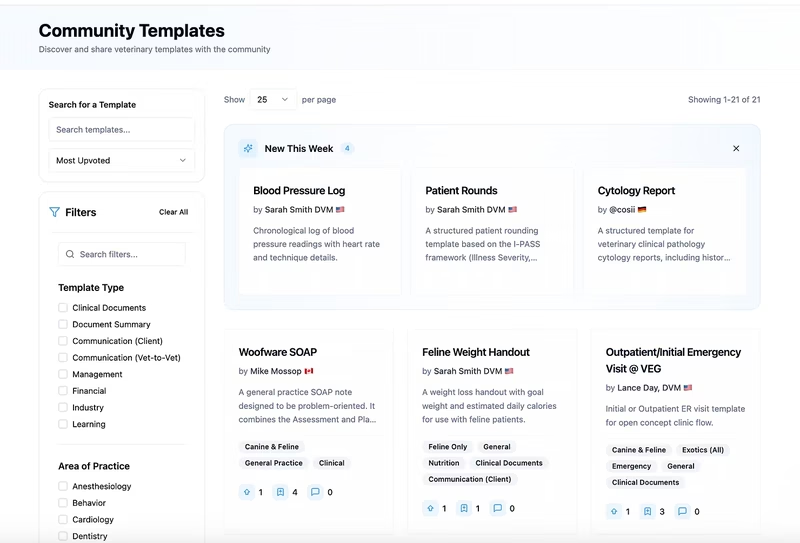
CoVet has a growing database of veterinary templates. Check out other ones that might be helpful for you:
Documentation that keeps up with your day. CoVet turns your voice into structured exam records, no manual entry required.
About the Author
)
)
)