
Maintain controlled drug records and stay audit-ready. CoVet's AI template builder is built by vets, which means you can generate exactly the controlled substance log format your clinic needs in minutes, with the right fields already in mind.
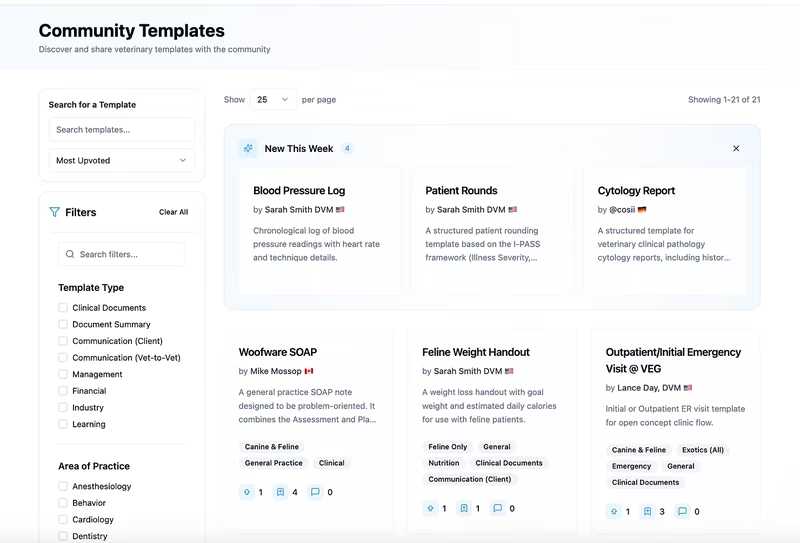
✨ Ready to build your controlled drug log?Unlock the full power of AI-assisted veterinary records CoVet's template library is built by vets, so the fields and workflows already reflect how real clinics operate. Save any template to your account and start using it with patients immediately. Want to customize it first? Use CoCo, our AI template assistant, to modify sections, add instructions, and tailor the format to your practice — all through a simple chat interface. |
Automating Your Veterinary Controlled Drug Log Template
A printable log helps standardize recordkeeping, but manual entry still leaves room for transcription errors, illegible handwriting, and gaps that become problems during audits and disputes. If you want to reduce that administrative burden, AI in veterinary medicine offers a more reliable path forward.
CoVet is an AI-powered scribe that listens as you speak during or after an appointment and automatically organizes your documentation into structured records. For controlled substance logging, CoVet captures the relevant transaction details as part of your normal workflow, eliminating the need to transcribe entries separately at the end of a shift. Veterinarians contribute more than 500 new templates to CoVet every week, and you can build or modify your own using CoVet’s AI template builder.
For clinics looking to improve consistency without adding to the workload, SOAP note automation software helps teams spend less time on paperwork and more time with patients. Explore CoVet's full list of AI vet tools to see what fits your workflow.
CoVet has a growing database of veterinary templates. Check out other ones that might be helpful for you:
Frequently Asked Questions About Veterinary Controlled Drug Log
What information should be included in a veterinary controlled drug log entry?
A useful drug log template captures enough detail to account for a controlled substance from receipt through to administration or disposal.
Most veterinary practices aim to capture enough detail in each log entry to account for a controlled substance from receipt through to administration or disposal. Fields that commonly appear in inspection-ready logs include:
Drug name, schedule, strength, and form: the substance being tracked, its DEA schedule, concentration (e.g., 500mg/mL), and whether it's a tablet, vial, or patch
Transaction date: when the substance was dispensed, administered, or wasted
Quantity dispensed and running balance: how much was used in the transaction and the updated inventory count after each entry
Patient information: the animal's name, species, and owner/client name to connect the transaction to a specific record
Bottle or lot number: the container identifier to help reconcile the log against physical inventory
Prescribing veterinarian and administering staff: who authorized the use and who carried it out
Invoice number (for received shipments): to cross-reference against invoices from your distributor
DEA guidance and AAHA resources generally point to these fields as a baseline for audit-ready recordkeeping, though requirements can vary by state. For more context on documentation standards, see our overview of veterinary medical records laws, and always check with your state veterinary board for the specifics that apply to your practice.
What is the best format for organizing a veterinary controlled drug log?
Whether you use printable controlled drug log sheets or a digital system, the format should make any transaction easy to trace.
DEA guidance generally points to records being maintained in a way that makes them easy to locate and review, and many state boards have retention periods of two to three years, though this varies. In practice, that means your log format should make it reasonably straightforward to trace any transaction during a review.
The two most common approaches are:
Drug-by-drug logs: a separate log (or log section) for each controlled substance, with each page dedicated to one drug, one strength, and one container. This format tends to make reconciliation more manageable since each entry traces back to a single bottle's running balance.
Combined chronological logs: all transactions recorded in date order regardless of drug. This can work for smaller practices with limited controlled substance volume, though reconciling across multiple drugs becomes more involved.
AAHA generally recommends bound logbooks over loose-leaf formats, as they provide a clearer paper trail. If you're using a digital system, tamper-evident records with timestamps serve a similar function. As always, check your state board's guidance for any format-specific requirements that may apply.
How do veterinary practices track controlled substance waste and partial doses?
Controlled substance waste tends to be closely reviewed during inspections, since partial vials and unused doses can create inventory discrepancies if not documented carefully. When a drug is partially administered and the remainder is discarded, most practices record:
The quantity administered to the patient
The quantity wasted (the remaining portion not used)
The disposal method (many clinics use an authorized disposal system or mix the waste in an irretrievable medium)
A witness notation: the initials of a second staff member who observed the waste, which many practices include as a standard safeguard
The updated running balance, reflecting both the amount administered and the amount wasted
Ideally, the physical inventory after a waste entry aligns with what the log shows. When it doesn't, documenting the discrepancy and investigating it promptly is generally considered good practice. Clinics with higher controlled substance volume often reconcile more frequently rather than relying solely on periodic inventory counts. For practices thinking about workflow more broadly, improving veterinary efficiency often involves tightening these kinds of documentation processes.
Should veterinary clinics use separate logs for each controlled drug or one combined log?
Separate drug logs are the more defensible choice for most practices. Keeping individual logs per drug and per container makes inventory reconciliation cleaner, reduces the risk of entry errors crossing between drugs, and makes it easier to identify discrepancies during auditing. Each container gets its own log page, so the running balance reflects a single bottle's history from receipt to depletion or disposal.
Combined logs can work if your practice carries a small number of controlled substances or has very low volume, but they require more careful organization to ensure an auditor can trace each drug's transaction history without confusion. If you use a combined format, clear drug tracking columns and consistent organization by substance are critical.
Whichever format you choose, consistent log organization across your entire team matters more than the format itself. Staff should document entries the same way regardless of who is on shift. This is where standardized templates and digital documentation tools can help, particularly ones that support consistent data entry across team members. For practices thinking through the broader picture, veterinary practice management is worth exploring as a framework for building more consistent clinical workflows. Pairing the log with a veterinary SOP template helps every staff member document the same way.
What details should a veterinary practice record when receiving controlled substance shipments?
The receiving log is typically where the accountability chain begins, so it's generally worth being as thorough here as with the dispensing log. Fields that most practices include when a controlled substance shipment arrives:
Drug name, schedule, strength, and form: matching what was ordered and what's on the label
Quantity received: the number of vials, tablets, or patches in the shipment
Lot number and expiration date: useful for traceability in the event of a recall or query
Invoice number and supplier information: the distributor name and invoice reference for cross-referencing
Date received and receiving personnel: who accepted the shipment
Adding the received quantity to the running balance for that drug helps create a continuous record from the time the substance enters the practice through to its administration, waste, or disposal. Practices that also keep thorough vet SOAP notes may find it easier to cross-reference clinical and compliance records when questions arise. Standardized printable veterinary exam forms support the same chain-of-record discipline elsewhere in the clinic.
About the Author
)
)
)