Download a free veterinary physical exam template to standardize documentation across your clinic.
Automating Your Veterinary Exam Template
A good veterinary template does more than save time, it keeps documentation consistent from one clinician to the next.
A printable checklist can help standardize your physical exams, but it still requires manual entry after the fact. If you're looking to reduce that documentation time, AI in veterinary medicine offers another option.
CoVet is an AI-powered scribe that listens as you speak during or after an appointment and automatically organizes your findings into structured records. Instead of filling out a template field by field, you talk through the exam as you normally would. CoVet captures the relevant details, including vitals, body system findings, and your assessment and plan, then formats everything into a SOAP note or physical exam record.
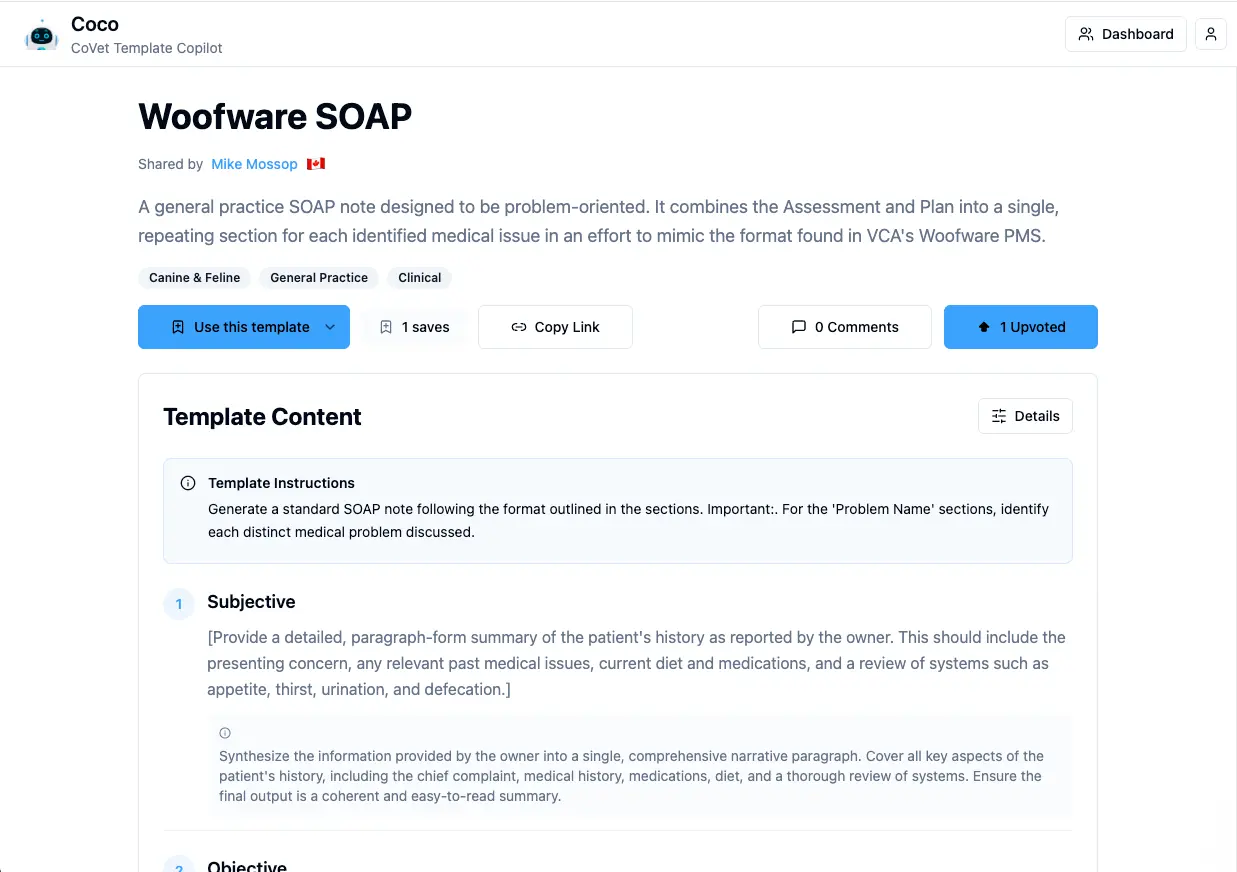
The platform includes 85+ customizable templates for different visit types and species. You can also build your own using CoCo, CoVet's AI template builder, or adjust existing templates to match how your clinic documents. Custom abbreviations let you convert common phrases automatically (like "left eye" to "OS"), and the finished record syncs directly to your PMS through integrations or a Chrome Extension.
For clinics looking to improve consistency without adding to the workload, SOAP note automation software can help your team spend less time on paperwork and more time with patients. Explore CoVet's full list of AI vet tools to see what fits your workflow.
Check out our other templates
CoVet has a growing database of veterinary templates. Check out other ones that might be helpful for you:
Veterinary Dental Chart Template
Veterinary Treatment Sheet Template
Veterinary Patient History Form Template
Veterinary Discharge Instructions Template
Veterinary Controlled Drug Log Template
Documentation that keeps up with your day. CoVet turns your voice into structured exam records, no manual entry required.
Frequently Asked Questions About Veterinary Physical Exam Template
What Is Included In A Veterinary Physical Exam Template For Dogs And Cats?
A thorough veterinary physical exam template typically covers patient and client identification, history, vital signs, a body systems checklist, and space for your assessment and plan. Used at the table, this works as a physical exam checklist that keeps every body system accounted for.
The template provided above includes fields for:
Patient and client info: name, species, breed, age, sex, weight, microchip number, and owner contact details
History: chief complaint, current medications, allergies, diet, vaccination status, and relevant medical history
Vital signs: temperature, heart rate, respiratory rate, pulse quality, weight, body condition score (BCS), muscle condition score, mucous membranes, capillary refill time (CRT), and hydration status
Body systems: checkboxes for WNL (within normal limits) or ABN (abnormal) across general appearance, eyes, ears, nose, oral cavity, lymph nodes, cardiovascular, respiratory, abdominal, gastrointestinal, urogenital, musculoskeletal, neurological, integument, and pain assessment, with space for exam notes on any abnormal findings
Diagnostics, assessment, and plan: sections for diagnostics performed, your primary assessment and problem list, treatment plan, client education, and follow-up recommendations
This structure aligns with the SOAP note format and helps keep documentation consistent whether you're seeing a routine wellness visit or a complex case. For more on structuring clinical documentation, see our guide to vet SOAP notes.
How Do I Customize A Veterinary Physical Exam Checklist For Wellness Visits Vs. Sick Visits?
The core structure of a physical exam checklist stays the same regardless of visit type, but you can adjust the emphasis and detail based on why the patient is there.
For a wellness exam, you might expand sections for preventive care documentation: vaccination status, parasite prevention, diet and weight trends, dental grading, and age-appropriate screening recommendations. The problem list may be brief or empty, and the plan often focuses on client education and scheduling the next visit.
For a sick visit, the checklist should give you more room to document the chief complaint in detail, note abnormal findings across body systems, and build out a differential list. Your problem list and assessment become the focus, with a more detailed treatment plan and shorter recheck intervals.
For a recheck exam, you can streamline the template to focus on the specific system or problem being monitored, with comparison notes to the previous visit.
Many clinics keep separate SOAP note templates for each visit type. CoVet's templates are fully customizable to your needs. You can adjust fields, reorder sections, or build templates from scratch using CoCo, the AI-powered template builder. Once your templates are set up, you just speak naturally during or after the exam and CoVet categorizes your findings into the right sections automatically. No toggling between fields or filling in boxes manually.
For tips on building effective templates, see our guide to veterinary SOAP templates.
What Are The Minimum Required Fields For A Veterinary Physical Exam Record For Compliance?
Requirements vary by state, but most veterinary medical records laws share common expectations for what a complete patient record should include.
At minimum, a compliant veterinary physical exam record typically requires:
Patient identification: species, breed, age, sex, weight, and any unique identifiers like microchip number or patient ID
Client/owner information: name and contact details
Date of service and examiner: who performed the exam and when
History and chief complaint: why the patient is being seen
Vitals and physical exam findings: documented observations from the examination
Problem list and assessment: your clinical impression based on the findings
Treatment plan: medications prescribed, procedures performed, and client instructions
Follow-up recommendations: recheck timing or referral notes
Some states also require records to be retained for a specific number of years and mandate that entries be legible, dated, and attributable to the person who wrote them.
The template above includes all of these fields and a footer reminder about retention requirements. For a deeper look at documentation standards, see our overview of veterinary medical records laws.
What's The Difference Between A Veterinary Soap Template And A Physical Exam Template?
A physical exam template and a veterinary SOAP template overlap, but they serve slightly different purposes.
A physical exam form is focused on capturing the objective findings from your hands-on examination: vitals, body system assessments, and any abnormalities observed. It's often structured as a checklist to ensure consistency and completeness during the exam itself.
A veterinary SOAP template is a broader documentation framework that organizes the entire patient encounter into four sections:
Subjective: client-reported history, symptoms, and concerns
Objective: your physical exam findings, vitals, and any diagnostic results
Assessment: your clinical impression, diagnosis, or differential list
Plan: treatment, medications, client instructions, and follow-up
In practice, the physical exam template feeds into the "O" (Objective) section of a SOAP note. Many clinics use a physical exam checklist during the appointment, then transfer those findings into a SOAP format for the final medical record.
If you want to combine both into a single workflow, CoVet can capture your exam findings and client conversation in real time and organize everything into vet SOAP notes automatically.
How Can Ai Scribing Software Auto-Fill A Veterinary Physical Exam Template During Appointments?
AI scribing tools like CoVet listen as you speak during or after an exam and convert your words into structured exam notes without manual data entry. Clinics that still prefer paper can start from our printable veterinary exam forms.
Here's how it works in practice: you talk through your findings as you examine the patient, either out loud or into a recording after the appointment. The software captures what you say, filters out non-clinical conversation, and organizes the relevant details into the appropriate template fields, including vitals, body system findings, assessment, and plan.
CoVet takes this a step further with features designed for veterinary practice management workflows:
Customizable templates let you match your clinic's documentation style
Custom abbreviations auto-convert phrases like "within normal limits" to "WNL"
Multi-patient support creates separate records when you see multiple pets in one visit
PMS integration syncs finished records directly into your practice management system
This type of SOAP note automation software can help reduce the time spent on documentation and improve consistency across your team. For clinics focused on improving veterinary efficiency, workflow automation is one of the more practical places to start, especially given the link between administrative burden and veterinary burnout statistics.
To see how AI scribing fits into broader clinic operations, explore our full list of AI vet tools.
About the Author
)
)
)