
Most veterinary teams never planned to be marketers. Between patient care, documentation, and staff management, marketing can feel impossible to prioritize. This guide simplifies it.
We worked with CoVet’s head of marketing and grabbed quotes from practicing veterinarians to outline what actually works for clinics—how to get found online, convert visitors into clients, and build a reputation that grows itself.
TL;DR:
Almost one in ten clinics still have no website, and slow or outdated sites quietly lose clients. A clear, fast veterinary website with visible “Book Now” buttons converts better than redesigns built for looks.
Strong local SEO for veterinarians and review consistency may help outrank corporate chains without paid ads.
Social media marketing for vets tends to work better when posts educate, not entertain. Local health alerts and preventive-care tips build authority faster than pet memes.
Paid search doesn’t need a big spend. One focused Google Ads for veterinarians campaign tied to high-value services can outperform broad awareness ads.
The best marketing still happens inside the clinic. Consistent communication, documented visit summaries, and timely follow-ups drive reviews and retention automatically.
Each step in this guide connects marketing back to everyday workflows, so growth happens naturally while you focus on care.
See how faster notes turn into happier clients and more reviews. Try CoVet free and make every interaction part of your clinic’s marketing engine.
When your clinic website fails to bring in new clients
Many clinics invest in a veterinary website only to find it doesn’t deliver more appointments. Most problems fall into two categories: visibility and conversion. According to the 2023 iVET360 Veterinary Marketing Benchmark Report, nearly one in ten veterinary practices now have no website at all, a number that has grown since 2022.
Without a functional online presence, a clinic becomes nearly invisible to new clients while corporate groups expand their reach.
Even when a site exists, design and usability often erode trust. The same report found that 75 percent of pet owners judge a clinic’s credibility by its website design. Corporate hospitals outperform independent clinics on every technical measure—mobile responsiveness, page speed, and SEO optimization—making it harder for smaller practices to rank locally.
Joe Fitzpatrick is the Head of Marketing at CoVet and a demand generation strategist with over a decade of experience turning complex ideas into scalable growth for e-commerce and healthcare brands.

With a Master’s in Digital Marketing and Analytics from Technological University Dublin, Joe blends data, storytelling, and strategy to help veterinary practices compete with corporate giants. Before joining CoVet, he led marketing teams through major growth phases—building brands that convert curiosity into loyalty. When he’s not diving into dashboards, he’s helping clinics see that good marketing starts with clear communication.
Joe, CoVet’s very own Head of Marketing, says many clinics start in the wrong place.
“Do all the free things first. Google gives you Google My Business and Reviews. They don’t cost anything but dramatically improve visibility online.” - Joe Fitzpatrick, CoVet Head of Marketing
That means simple steps—verifying your Google Business Profile, requesting reviews, and setting up Google Analytics—often do more than expensive redesigns.
The key is focus. Diagnose whether your challenge is visibility or conversion, then adapt your veterinary marketing plan to target that issue directly. With the right foundation, even a modest veterinary website design can start driving consistent new-client growth.
Time available | Budget available | Best focus areas | Expected outcome |
|---|---|---|---|
Low time / Low budget | <$300/month | - Claim and optimize your Google Business Profile- Ask for client reviews weekly- Post monthly educational content (preventive tips, seasonal care)- Attend free veterinary conferences webinars | Improved visibility in local search and stronger client trust. |
Low time / Moderate budget | $300–$1,000/month | - Run one Google Ads for veterinarians campaign targeting high-intent searches- Refresh key veterinary website pages for speed and clarity- Automate follow-ups with tools like CoVet | Steady stream of new inquiries with minimal management effort. |
Moderate time / Low budget | <$300/month | - Build a consistent social media marketing for vets calendar- Engage with local shelters or schools for community partnership marketing- Share client success stories | Increased community awareness and organic referrals. |
Moderate to high time / Moderate to high budget | $1,000–$5,000+/month | - Combine SEO, paid ads, and content strategy- Launch a preventive or wellness campaign (dentals, checkups)- Measure ROI with tracking tools and SOAP note automation | Predictable, scalable growth that supports long-term clinic goals. |
Diagnose whether you have a visibility or conversion problem
Before spending on a redesign or ads, identify the real issue. Most underperforming veterinary websites struggle with either visibility or conversion.
A visibility problem means clients can’t find you. Signs include low search rankings, minimal traffic in Google Analytics, or few calls and inquiries. The 2023 iVET360 Veterinary Marketing Benchmark Report found that corporate hospitals outperform independents by more than 10 percentage points in SEO optimization, leaving many local clinics buried online.
A conversion problem means people visit your site but don’t book. That often comes from slow load times, cluttered pages, or missing “book now” buttons. Joe, CoVet’s head of marketing, says, “Keep it clear, fast, and focused on helping people schedule care.”
Check your analytics. Low impressions mean visibility issues. High traffic but few bookings means conversion trouble. Knowing which problem you’re solving keeps your veterinary marketing plan focused and your veterinary website design efficient.
Strategy if you need visibility: SEO and local search basics
Strong local SEO for veterinarians is what connects a clinic with pet owners searching nearby, and it is often the highest-return channel for independents.
When clients search online for care, your clinic’s visibility depends on how clearly search platforms understand who you are and where you are. That understanding comes from local SEO, short for search engine optimization. It means improving how your clinic appears in local search results on Google, Apple Maps, and other directories.
Traditional SEO focuses on ranking nationally for broad terms. Local SEO for veterinarians is different, it connects your clinic with nearby pet owners searching for help right now, such as “vet near me” or “dog dental cleaning in [your city].” These searches are highly specific and indicate real intent to book an appointment.
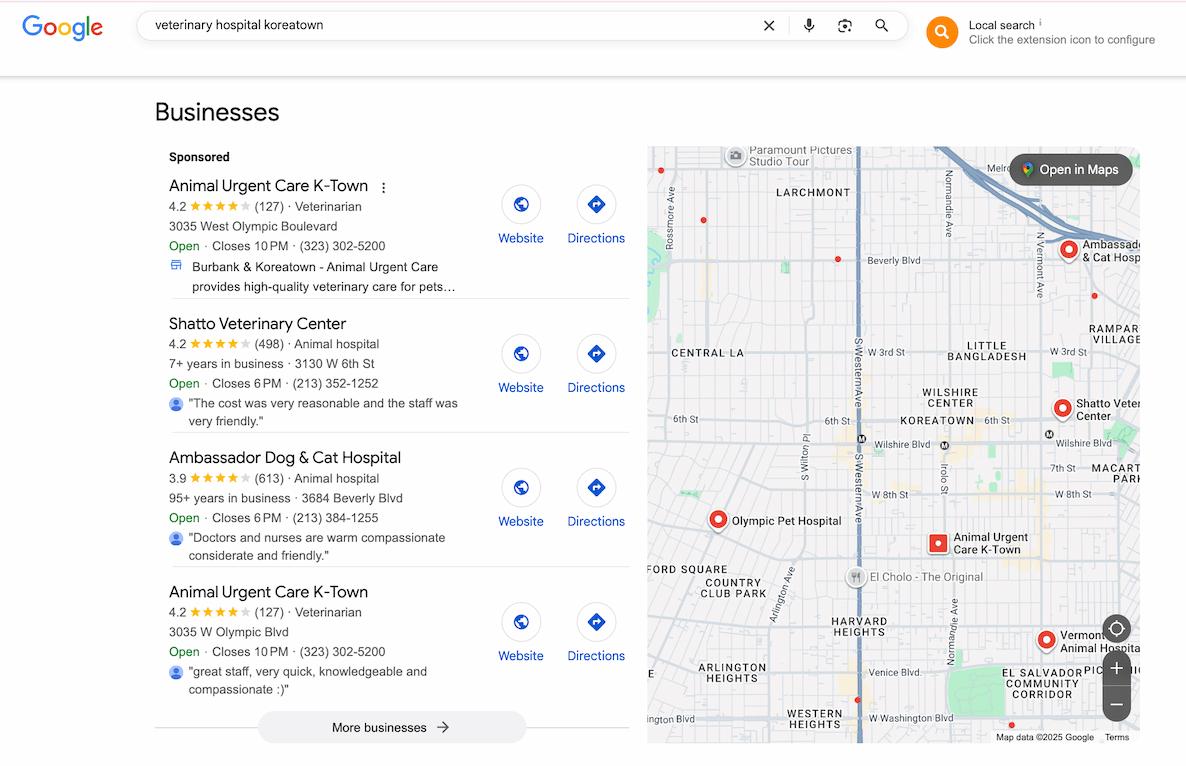
Joe, CoVet’s head of marketing, advises clinics to start simple: “Do the free things first. Google My Business and Reviews are non-negotiable for visibility.” That’s because these profiles feed data into both Google Maps and new AI-driven search systems.
In this next era, AEO, or answer engine optimization, is becoming just as important. It ensures your clinic appears in AI-generated summaries and voice responses that pull from verified, well-reviewed local sources. Many of the AEO practices overlap with traditional SEO - working on your SEO will naturally help boost your presence on LLM responses.
The report mentioned above found that corporate hospitals average nearly 100 more Google reviews than independents, giving them a major edge in both traditional and AI-driven search visibility. A consistent online reviews management process—asking satisfied clients for reviews and responding to every one—strengthens both your search ranking and credibility.
Strong local SEO and review discipline may help your clinic to appear not just in maps and listings but in AI-powered local recommendations as well. For independent hospitals, this visibility is one of the highest-return marketing investments available.
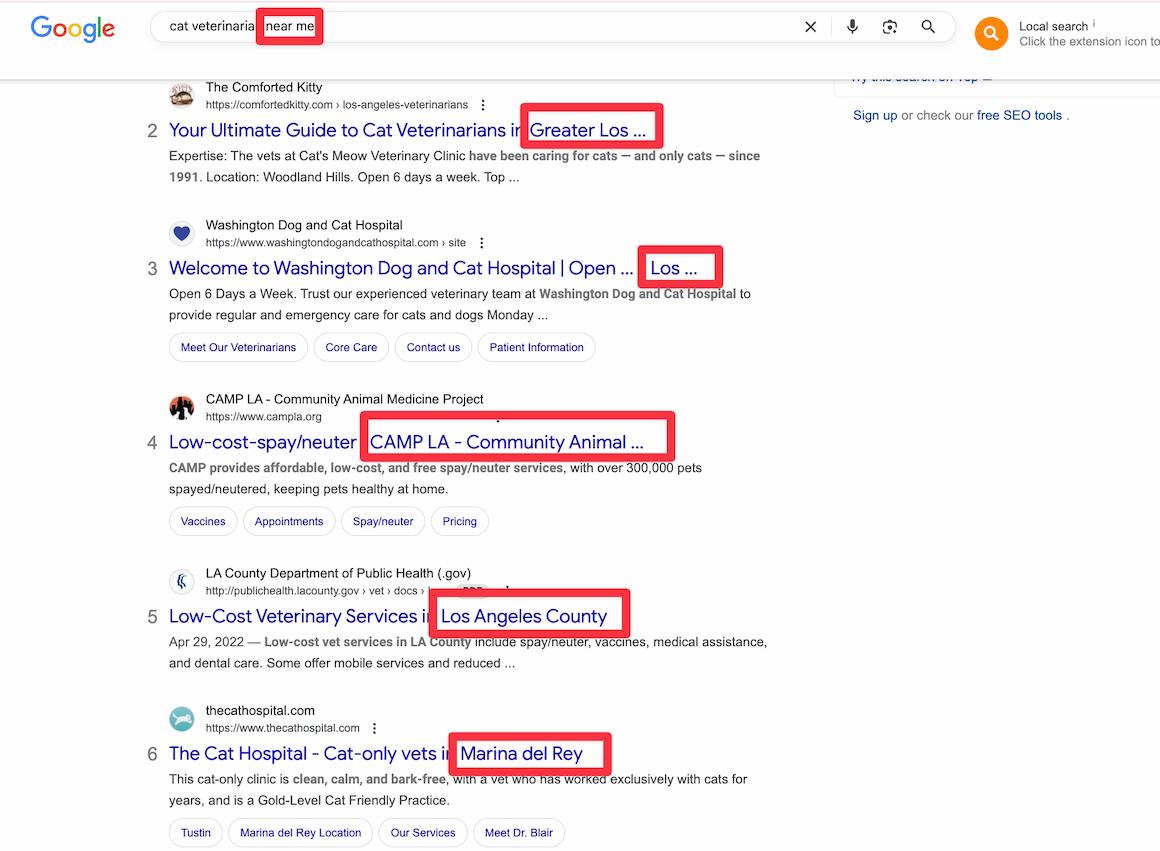
Strategy if you need conversions: trust and booking design
Once clients reach your veterinary website, they make quick judgments. Stanford research cited in the report found that 75 percent of users judge a clinic’s credibility by its website design. In other words, your design directly shapes whether someone books or leaves.
Conversion issues usually come down to two things: unclear trust signals and missing next steps. A trustworthy veterinary website design should make it obvious who you are, what you do, and how to schedule care. Add staff photos and short bios so clients can see the people behind the practice. List your services clearly, avoid cluttered menus, and use straightforward calls to action such as “Book appointment” or “Call now.”
Joe, CoVet’s head of marketing, often sees clinics lose clients at this stage. “Even a slow site can cost you a booking. Test how fast it loads on mobile and cut anything that distracts from scheduling.”
Integrating online appointment booking also matters. Clients increasingly expect to book on their own time, and every extra step reduces follow-through. A simple form, clear contact info, and visible hours help pet owners act immediately—turning web traffic into confirmed visits.
Tracking website ROI through calls and forms
Even a strong veterinary website design only delivers value when you can see what it’s producing. Tracking your website’s return on investment (ROI) helps you connect clicks and calls to real clients.
Start simple. Add a “How did you hear about us?” question to your new-client form or phone intake script. It’s free, fast, and instantly shows whether new clients found you through Google, referrals, or social media.
Pair that with basic call tracking software—affordable tools like CallRail, WhatConverts, or Google Call Tracking inside Google Ads can help you see which marketing sources drive the most calls. You can also use Google Analytics to count form submissions for online bookings or contact requests.
Joe, CoVet’s head of marketing, cautions against making it too complex too soon. “At first, the goal isn’t to build dashboards. It’s to collect data you can trust. Once you’re getting steady calls and form submissions, then it’s worth layering in automation.”
Manual tracking in a shared spreadsheet works fine early on. The key is consistency. Over time, as your veterinary marketing plan matures and more systems integrate, you can adopt automated tracking to save time and see trends faster.
Knowing these numbers makes it easier to scale confidently as you own a veterinary practice and start turning marketing spend into measurable clinic growth. Marketing works best when it is planned alongside the rest of the veterinary business, from staffing to budgeting. For more on that, here's our 201-level guide on veterinary practice management.
When social media drains staff time without results
Many clinics post regularly but rarely see new clients from it. Social media marketing for vets takes time that teams can’t spare, especially when there’s no clear purpose behind the posts.
Joe explains, “If it doesn’t engage pet owners in your area, it’s just noise.” Social platforms should build visibility, not pressure. Focus your digital marketing for veterinarians on the few platforms that connect directly with local pet owners. Every post should show your team’s care and professionalism, not just fill a schedule.
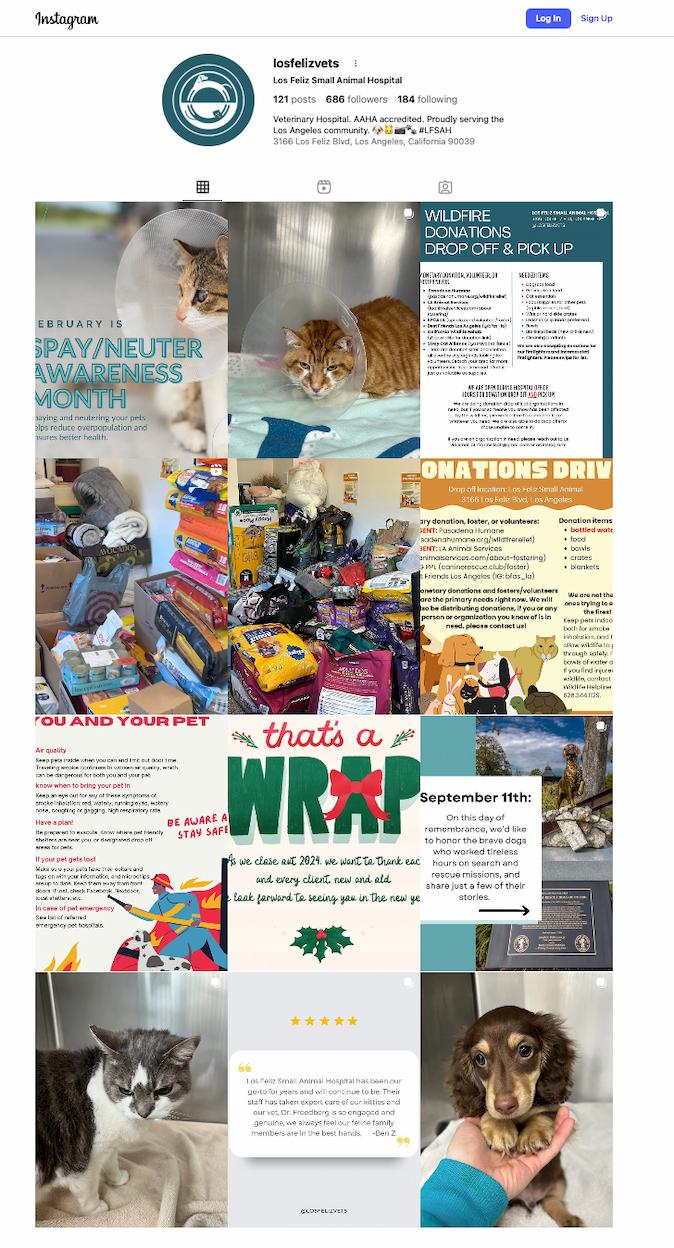
The next sections outline how to tell if your time is being wasted, how to simplify your process, and how to link social activity to real clinic results.
Diagnose if you’re overspending time or missing targeting
If your clinic’s social media marketing for vets feels active but delivers few inquiries, it’s time to check who’s actually engaging. Many clinics see likes from other veterinary accounts or pet pages—but few from local pet owners who could become clients.
Joe, CoVet’s head of marketing, puts it simply: “If it doesn’t bring engagement from pet owners in your area, it’s just noise.” Check the location data in your page insights to see where your followers live.
A quick social test helps too. Boost one post that already performs well and restrict the audience to your ZIP code. If engagement drops, you’re missing local reach. If it improves, you’ve confirmed your content is connecting with the right people.
Strategy to save time: ready-to-post education content
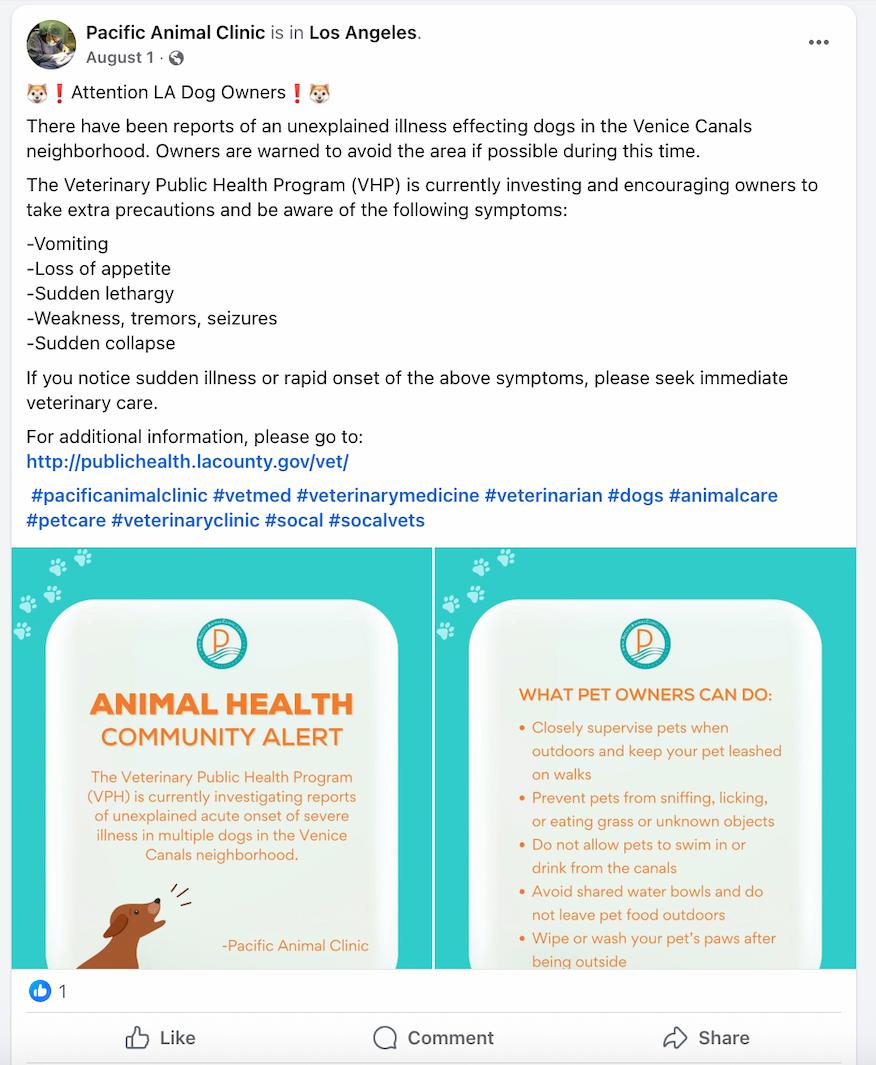
Strategy to get results: align platforms to clinic goals
Not every platform helps your clinic reach clients. The key to effective digital marketing for veterinarians is choosing the few that match your goals.
Facebook is a strong channel for local visibility and client engagement, thanks to its community groups and ad targeting tools. According to SocialPilot, Facebook offers robust targeting and conversion options that outperform most platforms for local service businesses.
Instagram is better for showing clinic culture and the human side of your work. Posts featuring team members, patients, and daily care routines consistently drive higher engagement in visual industries. WSI notes that Instagram excels in visual storytelling and brand familiarity—perfect for demonstrating your care approach.
LinkedIn serves a different purpose. It helps with hiring, partnerships, and professional networking rather than attracting pet owners. As Chigain explains, LinkedIn is primarily a professional connection tool, not a client acquisition platform.
When each platform is tied to a measurable clinic goal, veterinary marketing services become easier to manage and far more productive.
Measuring what matters: from likes to booked appointments
Many clinics lose momentum with social media marketing for vets because results are hard to see. The best approach is to start measuring simply and build from there.
In the beginning, track only what connects to client activity—clicks to your website, appointment requests, and phone calls. These numbers show whether your efforts are driving action. Over time, you can add email marketing campaigns or call tracking tools to identify which platforms bring the most new clients.
Joe, CoVet’s head of marketing, emphasizes that progress matters more than precision early on. “The goal is to get real data, not perfect data. Once you can see what’s working, refinement becomes easy.”
Keep a lightweight record of posts, results, and booked visits. Even a shared spreadsheet can reveal trends that guide better decisions. Consistent tracking transforms social media from a time drain into a measurable part of your veterinary marketing services strategy.
When word of mouth and reputation don’t scale
Referrals and loyal clients are the backbone of most clinics, but they can’t carry growth forever. Even the best reputation needs visibility to keep new clients coming in.
Online reputation management turns everyday interactions into marketing fuel. Encouraging reviews, sharing visit summaries, and responding to feedback all extend the trust you’ve already built offline.
Real clinics are already using care-based marketing to grow. One practice manager on r/veterinaryprofession shared, “At my practice we do a monthly payment scheme that pays for free health checks, massive discounts on meds, castrates or spays, flea and worm treatment, vaccinations, etc… Works out cheaper than everyone else around and we're always busy because of it.”
Another added that focusing on preventive care, like dental cleaning campaigns, helped stabilize client visits and revenue. When reputation and outreach work together, your clinic grows steadily instead of relying on unpredictable referrals.
Diagnose if your issue is visibility or consistency
If happy clients aren’t leaving reviews, the issue is visibility. If reviews appear only once in a while, it’s consistency. Both affect how your clinic ranks and how new pet owners decide where to book.
The 2023 iVET360 Veterinary Marketing Benchmark Report found that corporate hospitals average 307 reviews compared with 210 for independents, giving them stronger local visibility even when client satisfaction is similar.
Timing makes the difference. The best moment to request a review is right after the visit—when care is fresh and the client feels reassured. Some teams build the request directly into their follow-up notes or discharge summaries so it becomes part of the routine rather than an afterthought. Tools like CoVet make this easy by keeping communication templates consistent across the team.
When reviews flow regularly, your clinic stays visible and trusted—without needing to run constant promotions.
Strategy: turn visit summaries into referral-worthy marketing
Clear, well-written visit summaries do more than document care. They extend the client experience after the appointment, reminding pet owners of the value they received and reinforcing trust in your team. That trust is what drives repeat visits and glowing reviews.
Dr. Mike, DVM and Cofounder of CoVet, often explains that good communication is part of good medicine. When clients receive an easy-to-understand summary that outlines findings, follow-up care, and next steps, they feel informed rather than overwhelmed. That confidence carries forward into how they talk about your clinic.
Using tools like CoVet helps teams keep documentation consistent and polished. Each clear summary or follow-up message becomes an extension of your online reputation management—a small but powerful marketing moment that encourages clients to leave positive feedback and share their experience.
Thoughtful documentation quietly markets your clinic every time a client opens their inbox.
Strategy: manage online reviews with intention
Reviews shape how new clients see your clinic before they ever visit. Managing them intentionally builds trust and boosts local visibility.
Start with a simple, steady process. Ask satisfied clients for feedback as part of your discharge or follow-up communication. A brief, polite request goes further than bulk reminders because it feels personal.
Use your Google Business Profile optimization tools to respond promptly to all reviews, both positive and negative. Thank clients for kind words, and when criticism appears, reply calmly and professionally.
Teams using CoVet often tie review follow-ups into their client communication templates so every doctor and technician asks the same way, every time. That consistency turns reviews into a predictable marketing engine, not an occasional bonus.
Strategy: amplify reputation through community partnerships
Community involvement is one of the most authentic forms of veterinary advertising ideas. Sponsoring local events, collaborating with shelters, or hosting pet education days positions your clinic as a trusted neighbor, not just a service provider.
These partnerships create natural word-of-mouth momentum. When clients see your team at a fundraiser or local fair, they connect your name with reliability and care.
Joe, CoVet’s head of marketing, points out that partnerships also support local SEO. Mentions and backlinks from community organizations strengthen community partnership marketing signals in Google’s algorithm, reinforcing both visibility and reputation.
Recognizing your staff’s participation in these events builds pride and retention, tying community engagement to team culture. Learn more about this in staff appreciation.
Strong community ties turn your clinic into part of everyday life for local pet owners—something no ad budget can replace.
When ads feel like throwing money away
Many clinics try online ads and give up quickly when results don’t appear. The problem often comes down to unclear targeting or weak tracking. Done well, veterinary advertising is a predictable channel rather than a gamble.
Joe recommends a simple approach. “Pick a few high-value services and run local campaigns on Google Search only. Skip display ads. Focus on Max Click bidding until your data grows.”
Effective veterinary clinic marketing uses ads that reach local pet owners who are ready to book. With clear targeting, steady optimization, and consistent tracking, advertising becomes a dependable part of your veterinary marketing strategies instead of an uncertain expense.
Diagnose if ads are reaching the wrong audience or mismanaged
When ads underperform, check two things first: who they reach and how they’re managed. Low click-through rates often mean poor targeting. Clicks without bookings usually point to weak landing pages or confusing next steps.
Joe advises watching performance weekly. “If no one on your team has time to adjust campaigns, they won’t succeed.” Ads need small, consistent tweaks, not constant resets.
Tracking location, keywords, and conversions helps you see if your veterinary marketing strategies are connecting with the right audience. A few focused campaigns managed well will outperform many scattered ones.
Strategy if reach is the problem: target high-intent searches
If your ads aren’t reaching the right people, narrow your focus to high-intent searches. These are phrases pet owners use when they’re ready to book, such as “emergency vet near me” or “cat dental cleaning [city name].”
Start with Google Ads for veterinarians that target local service keywords rather than broad terms like “animal care.” Use location filters so only nearby clients see your ads.
Joe recommends beginning with small, testable campaigns. “Set a budget equal to one average client visit per week and optimize as you go.” This approach balances visibility and control while data builds.
High-intent targeting ensures every dollar in your veterinarian marketing strategy connects to clients who actually need care now, not just general awareness.
Testing and tracking ad spend with realistic budgets
Advertising works much better when you can see what each dollar delivers. Start small and track results before scaling.
Use Google Ads reporting to monitor impressions, clicks, and conversions. Check your cost per inquiry weekly to see if campaigns are improving. Joe, CoVet’s head of marketing, recommends committing to a steady budget for two to three months to give campaigns time to build data before adjusting.
Once you know which keywords and ads bring actual clients, shift more of your spend there. Clinics already using tools like SOAP note automation software can extend that same tracking mindset to marketing—consistent, data-informed, and built for efficiency.
Clear metrics turn your veterinarian marketing strategy from guesswork into a reliable, measurable growth tool.
Next steps to make veterinary marketing sustainable
Sustainable marketing grows from daily habits, not isolated campaigns. Each clear client note, timely follow-up, and thoughtful review builds lasting visibility.
For most clinics, long-term success depends on communication and teamwork. When staff consistently explain services, document visits clearly, and share client education materials, marketing blends naturally into care delivery. Attending veterinary conferences can also help teams stay current on new communication tools and evolving client expectations.
These approaches reflect a growing trend: clinics building predictable income through wellness plans and preventive services. As one Reddit user noted, they found success aligning promotions with preventive care. For them, this created loyalty that outlasted any ad campaign.
CoVet supports that process by helping teams document and communicate efficiently. Consistent, well-written summaries create confident clients who share their experience and strengthen your reputation.
Treat marketing as part of maintaining your clinic’s overall health. Small improvements to your website, emails, and visit summaries compound over time, creating steady growth without constant reinvention.
Turn your team’s documentation into your strongest marketing channel. Automate summaries, track communication, and grow without adding hours.
Frequently asked questions about veterinary marketing
What should a veterinary marketing budget look like
Start with a modest, consistent budget that you can sustain for several months. Joe, CoVet’s head of marketing, recommends testing small, local campaigns and reinvesting in what drives appointments. Even a few hundred dollars a month in targeted veterinary marketing services can outperform sporadic, larger spends.
How do small vet clinics compete with corporate practices
Independents win through relationships and responsiveness. Corporate hospitals dominate ad spend, but smaller teams can stand out with faster communication, personalized care, and strong local reviews.
What role do veterinary staff play in marketing success
Every team member influences client experience. Friendly interactions, clear documentation, and timely follow-ups shape trust and retention more than any campaign.
How can vet clinics track ROI from social media
Keep it simple: track website clicks, calls, and appointment requests. Over time, connect those actions to booked visits to see which posts or campaigns actually drive clients.
What’s the most effective marketing tactic for veterinary client retention
Consistent communication. Personalized follow-ups, clear visit summaries, and educational reminders keep clients engaged and returning for care. Tools like CoVet make these touchpoints faster and more reliable.
About the Author
)
)
)